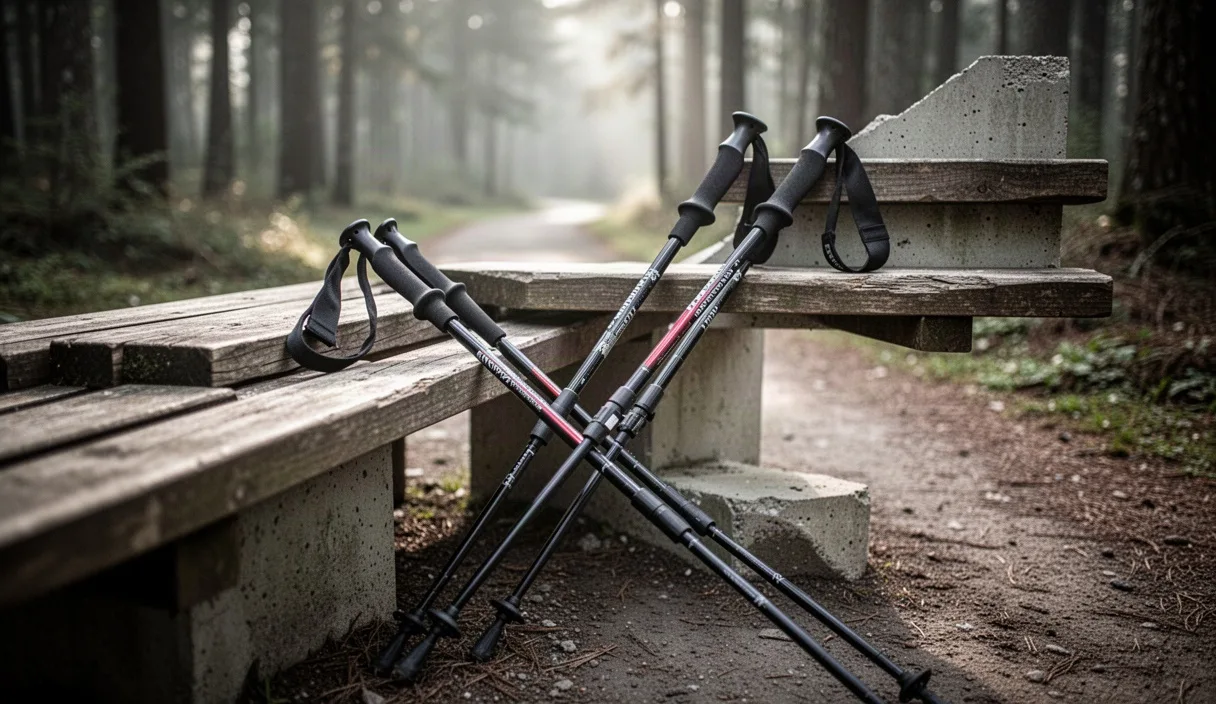
When people stop by our shop asking about walking poles, the conversation almost always lands on the same dilemma: carbon fiber or aluminum? Both materials have spent decades on mountain paths and neighborhood sidewalks, and both have loyal fans among our weekend regulars. Picking the right one is not about finding the best pole in the world. It is about matching the metal or composite tube to the way your body moves and the paths you actually walk.
A walking pole acts as an extension of your arm, transferring energy downward to take work off your knees and keep your balance steady. Aluminum brings forgiving strength, a lower price, and a reassuring ability to bend without snapping. Carbon fiber brings feather-light swing weight and natural vibration absorption, but it demands more gentle handling around sharp granite. Below, we break down how both materials behave under real conditions so you can pick the set that serves you best.
Material Differences in Hand Feel
The first thing you notice when holding a pole is not just how heavy it is, but how stiff it feels through your palm. Aluminum shafts, usually made from tempered aircraft-grade alloys like 7075 or 6061, have a solid, dense feedback. When you plant an aluminum pole firmly into packed dirt, you feel the mechanical feedback straight through the grip. Aluminum shafts also conduct temperature quickly. On a frosty November morning in the woods, an aluminum shaft turns ice-cold within minutes, transferring that chill right through thin gloves until your hands warm up.
Carbon fiber feels very different. It is built from microscopic threads of carbon woven together and set in resin. This construction gives the pole high tensile stiffness along its length while feeling hollow and buoyant in your grip. When you swing a carbon pole forward, the tip seems to float ahead with almost no effort from your wrist. Carbon is also a poor conductor of heat, which means the shaft does not pull warmth away from your fingers during late autumn walks or early spring outings.
Flex pattern is another quiet difference between the two materials. Under a heavy downward push, aluminum will give slightly along its entire curve before springing back. Carbon holds rigid right up until its structural limit. For walkers who lean heavily on their gear for balance while stepping down steep wooden stairs or creek banks, that extra rigidity of carbon creates a very firm, reliable platform underfoot.
| Feature | 7075 Aluminum | Standard Carbon Fiber |
|---|---|---|
| Thermal Feel | Cold to the touch in winter | Neutral temperature feel |
| Shaft Flex | Gradual, elastic give | Extremely stiff under vertical load |
| Impact Reaction | Dents or bends under sideways force | Resists shallow scuffs, fractures under shear load |
| Typical Shaft Weight (Pair) | 480 to 560 grams | 320 to 410 grams |
Vibration Transfer on Hard Pavement
If you do most of your walking on asphalt sidewalks, concrete greenways, or crushed limestone rails-to-trails routes, vibration matters more than almost anything else. Every time your pole tip strikes a hard surface, a shock wave travels up through the shaft, into the handle, and across your wrist, elbow, and shoulder joints. Over an hour of steady striding, your arms absorb between 3,200 and 4,400 of these tiny impacts.
Aluminum acts like a tuning fork when it strikes hard ground with bare carbide tips. It creates a high-frequency buzz or chatter that you can distinctly feel in your forearms. If you already deal with mild wrist stiffness, tennis elbow, or shoulder sensitivity, that constant metallic hum can leave your arms feeling tired or achy before your legs even get warm. If you manage flexibility & mobility or are recovering from an arm injury, we always suggest speaking with a physical therapist about your posture and pole height before logging high mileage on hard roads.
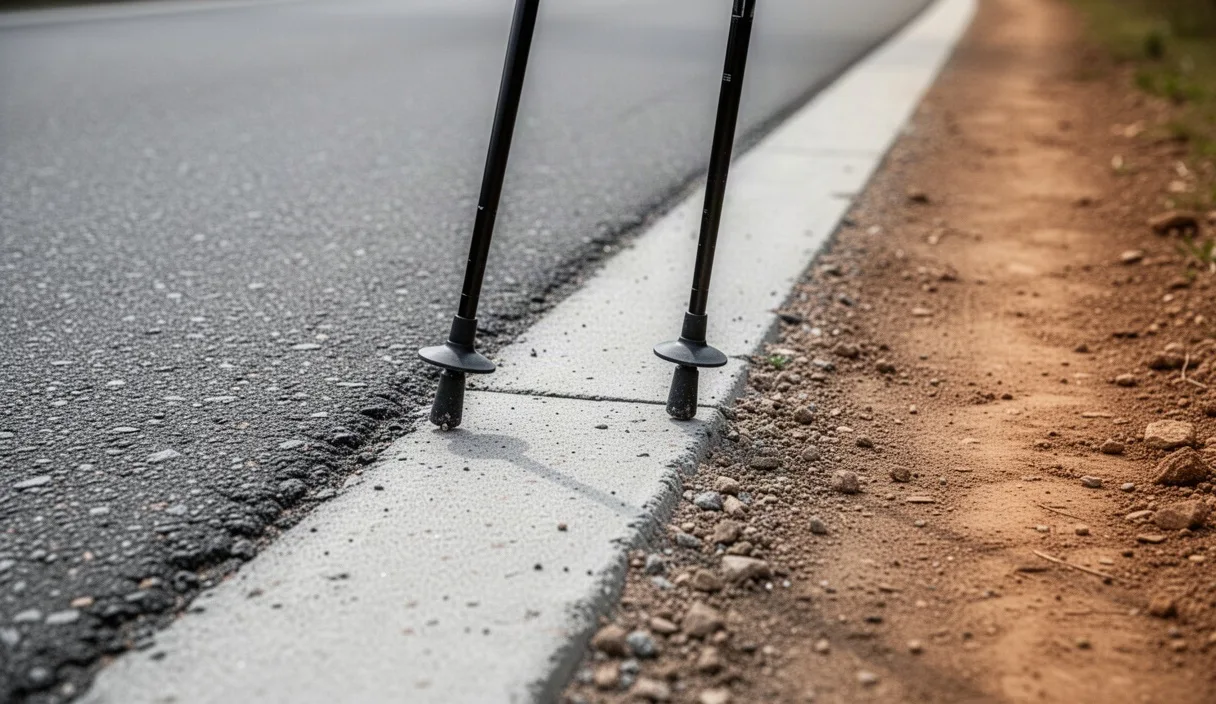
Carbon fiber absorbs that buzzing energy naturally. The layered structure of the fibers and resin disrupts high-frequency sound and shock waves before they travel all the way up the pole. The impact on pavement feels duller and softer, closer to a muted thud than a sharp ping. You can improve both materials by putting thick rubber walking feet over the metal tips, but carbon fiber paired with a quality rubber boot remains the kindest setup for pavement walking.
- Bare carbide on tarmac: Aluminum produces noticeable vibration; carbon dampens roughly a third of that sharp shock.
- Fitness pavement walking: Always fit rounded rubber paws over the tips, which cuts chatter on both materials by roughly 45 percent.
- Grip pairing: Natural cork or dense EVA foam handles absorb remaining shock much better than hard plastic handles, regardless of shaft material.
Durability Against Rocks and Drops
Durability is where aluminum earns its reputation as the workhorse of the trail. Aluminum handles rough, clumsy conditions with grace. If you slip on a muddy bank and your aluminum pole gets caught between two tree roots, the shaft might bend by 15 or 20 degrees under your weight. While a bent pole is frustrating, it rarely snaps in half on the spot. You can often limp it home, and in many cases you can gently lever it against a log to straighten it enough to finish your hike.
Carbon fiber behaves in the opposite way. Under normal downward pressure, high-grade carbon is extraordinarily strong, easily carrying heavy packs and steep descents without complaint. Its weakness is lateral point impact and torsional shear. If you drop a carbon pole onto a jagged boulder, or if the lower section wedges into a deep rock crevice while your body keeps moving forward, the carbon tube can crack, splinter, or shatter completely. Once a carbon shaft fractures, it cannot be bent back or repaired on the trail; it is finished.
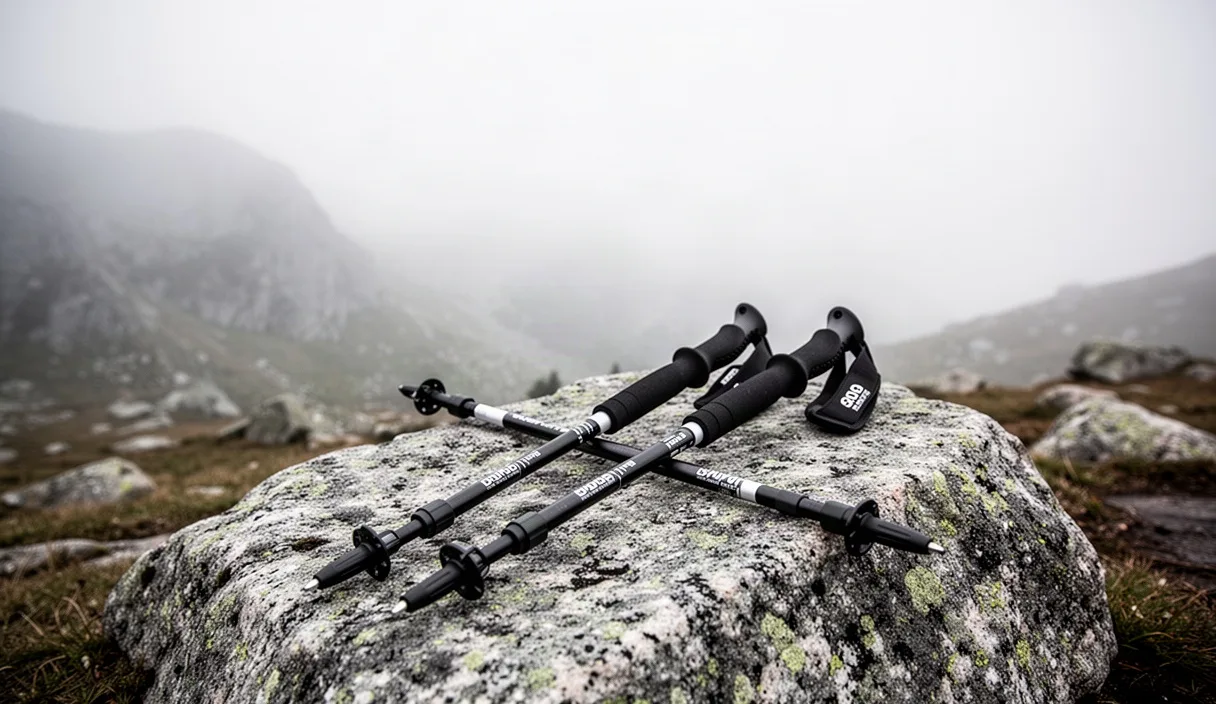
For walkers who love scree fields, boulder hopping, or narrow mountain routes with deep fissures between stones, aluminum provides peace of mind. It takes dings, scrapes against granite, and baggage handlers throwing luggage into bus compartments without catastrophic failure. For maintained dirt paths, park loops, and rolling pasture trails, carbon has more than enough strength to last for thousands of miles without a problem.
Weight Differences on Long Treks
On paper, the weight difference between carbon and aluminum looks tiny. A typical pair of three-section aluminum trekking poles weighs around 510 grams. A comparable pair of carbon poles weighs around 360 grams. That difference of 150 grams is roughly the weight of a medium apple. In your backpack, you will hardly notice it. In your hands, over a six-mile outing, it changes how your upper body feels at the end of the day.
Consider the mechanics of walking. You do not just hold a pole; you swing it forward with every alternate stride. Over a steady 10,000-step walk, each arm lifts, swings, and plants a pole approximately 5,000 times. Moving an extra 75 grams per arm across 5,000 repetitions adds up to 375 kilograms of total swing effort over the course of your morning. Lightening that pendulum weight reduces fatigue in your shoulders, upper back, and rotator cuffs.
Long-distance backpackers and hill walkers who measure their trips in days rather than hours feel this weight reduction clearly. As fatigue sets in toward the end of an afternoon, a lighter pole makes it easier to keep your plant timing crisp. Heavy poles can lead tired walkers to drag their tips or swing their arms wide, which wastes energy and increases the risk of tripping over your own gear.
Price Comparison and Value for Money
Good walking gear should fit your budget without making you worry about every scratch. Aluminum poles are far less complex to manufacture, which keeps their shelf price accessible. A reliable, durable pair of aluminum poles with secure flip locks and comfortable foam grips usually costs between $40 and $75. They represent outstanding value for anyone starting out, families outfitting several walkers, or hikers who are hard on their equipment.
Carbon fiber poles require specialized carbon layering, resin curing, and precision bonding at the joints. Because of that manufacturing labor, dependable carbon poles generally start around $95 and can reach $190 or more for ultralight models from heritage mountain brands. While that higher cost buys lower weight and superior vibration damping, it does not buy greater durability against accidental crushing or rock strikes.
When weighing long-term value, think about replacement parts. High-quality pole makers sell individual replacement shaft sections. If you bend the lower section of a $60 aluminum pole, a replacement section often costs around $14. Replacing a damaged carbon section can cost $30 or more. If you walk on trails with frequent rock traps, factoring in the cost of potential replacements makes aluminum the more practical financial choice.
Our Recommendation for Everyday Walkers
We do not believe there is a single winner here, but after watching hundreds of customers use both types over many seasons, clear patterns emerge. Your choice should reflect where you walk, how often you head out, and how you treat your gear when you are tired.
Choose aluminum if:
- You want an affordable, dependable pair of poles that can handle rough treatment without babying.
- You frequently walk through boulder fields, rocky stream beds, or scree where poles get jammed between stones.
- You need your gear to withstand being tossed into car trunks, checked on flights, or lent to friends.
- You are just beginning a walking habit and want to keep your gear investment modest.
Choose carbon fiber if:
- You walk daily on hard pavement or asphalt paths and want to shield your joints from vibration chatter.
- You walk long distances, regularly covering 8 miles or more in a single push, where low swing weight saves energy.
- You have nagging upper-body joint fatigue that flares up when carrying heavier gear.
- You stick mostly to cleared dirt tracks, park paths, and rolling hills where side impacts are rare.
Common Mistakes to Avoid
Whatever material you bring home, we see walkers make a few simple mistakes that cut their poles' lives short. Avoiding these small missteps will keep your poles functioning smoothly for years.
- Over-tightening the lever clamps: Modern flick locks use a tension thumb screw. Tighten it only enough so the lever closes with firm thumb pressure. Cranking the screw down too tight can crush carbon tubes and strip the threads on aluminum cam levers.
- Storing poles wet and collapsed: After a rainy outing, moisture gets trapped inside the telescoping shafts. Water causes aluminum to oxidize into a white powder that locks the sections solid, and it can cause corrosion on the internal hardware of carbon poles. Pull the sections apart and let them dry on a towel overnight.
- Ignoring deep gouges on carbon: Surface scratches in the clear resin finish are normal. However, if a rock takes a deep gouge out of a carbon pole and cuts into the black fiber threads, that section is compromised. Continuing to lean your full weight on a gouged carbon section risks a sudden break.
- Pulling shafts past the stop mark: Every telescoping section has a line marked "Stop" or "Max." Leaving less than 5 centimeters of tube overlapping inside the joint places massive leverage on the clamp, which will bend aluminum and crack carbon.
Getting Started with Your Poles
Once your poles are in hand, take ten minutes at home to dial in the setup before heading out for your first long loop. Getting the mechanical adjustment right matters more than whether your shafts are made of composite or metal.
Setting your walking height: Stand straight on a level floor wearing your normal walking shoes. Let your arms hang loose, then bend your elbows to a 90-degree angle, as if you were holding a mug of tea. Open the pole clamps, slide the sections until the top of the handle meets your palm, and close the levers securely. If your pole has three sections, adjust the middle and bottom sections equally so the pole maintains balanced strength along its length.
Checking the wrist strap: Slide your hand up through the bottom of the strap loop, then bring your palm down over the grip. The strap should rest flat across the back of your hand and wrist. When adjusted correctly, you can loosen your grip on the handle and let the strap support your downward push, which keeps your fingers relaxed and prevents hand cramps.
Inspecting the tips: Check that your poles came with carbide tips for dirt trails and detachable rubber feet for roads. If you are walking around your neighborhood this evening, push the rubber feet firmly over the metal points. Take a gentle twenty-minute loop around the block to get used to the rhythm, listen to how the poles strike the ground, and enjoy the extra stability with every stride.