




Product comparisons · United Kingdom
Comparing UK joint support capsules and gels
Brands describe very different things with the same words, so this page groups the main UK options by format and ingredient story. No prices, no rankings, no joint pain relief promises.
Format first, brand last
Capsules · blends · topicals · single herbs
How we group these products
Comparison in this category is harder than it looks, because brands describe very different things with the same words. A turmeric capsule and a glucosamine complex are both called joint support, but they are built on different logic and often aimed at different routines. We split the market into three buckets: botanical-led capsules, hybrid formulas that mix herbs with structural nutrients, and topical balms or gels. That is a more useful sorting than brand loyalty or bottle size, because it tells you what you are buying.
A fourth category exists in the middle: single-herb products like standalone devil's claw capsules, which we flag wherever they come up. Once you know which bucket a product belongs to, the rest of the label becomes much easier to read — extract strength, absorption partners, and how often you would actually take it.
Reading order
Group the market, then read each group against the same four questions: ingredient category, extract strength, daily cost from the dose, and format fit with your routine.

Botanical-led
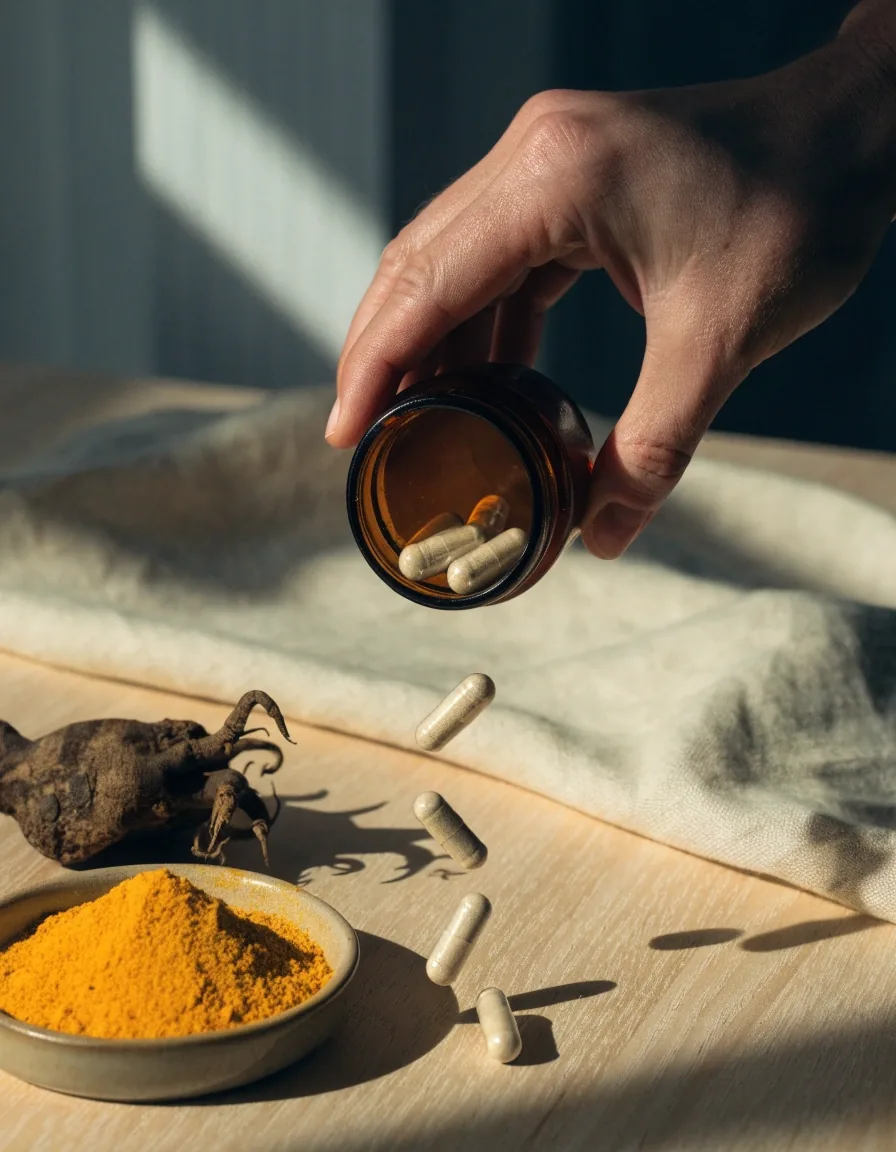
Bio-Nature Joint Aid Herbal Complex: turmeric, boswellia and black pepper in vegetable cellulose capsules.
Hybrid
Gluco Chondro 2700: glucosamine, chondroitin, MSM, devil's claw, hyaluronic acid and turmeric in one product.

Retailer range
Holland & Barrett Muscle & Joint Pain Relief: tablets and capsules for once- or twice-daily use, in 50 and 100 counts.
Single herb
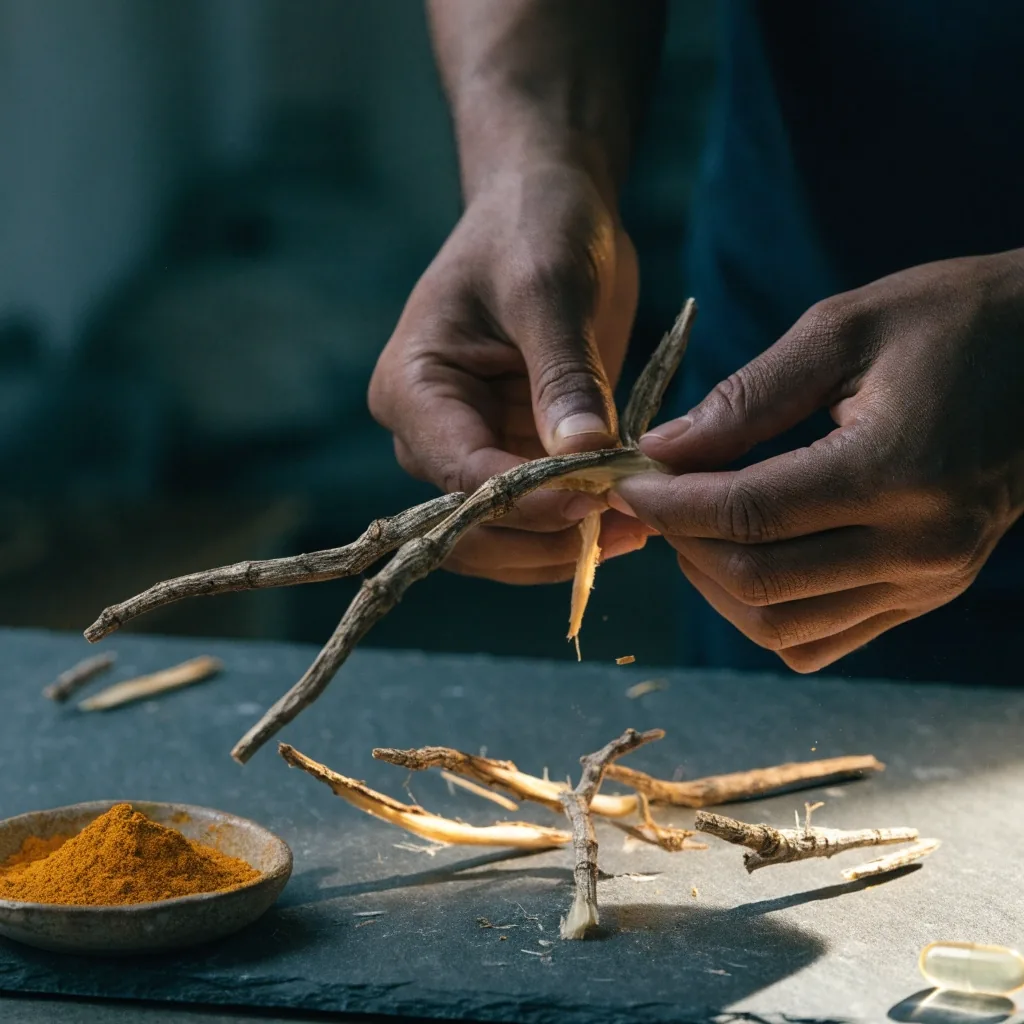
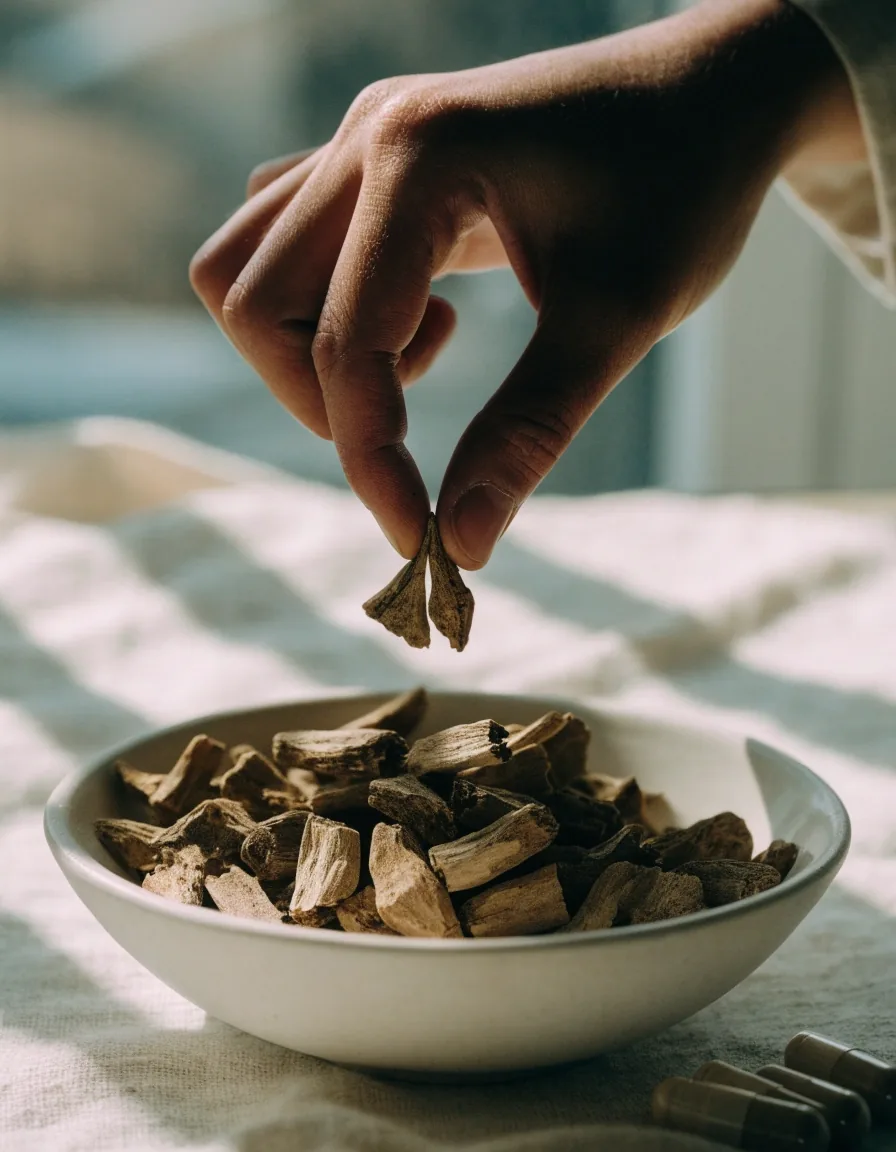
Devil's claw sold on its own, as well as inside larger formulas — the simplest way to try one botanical at a time.
Topical
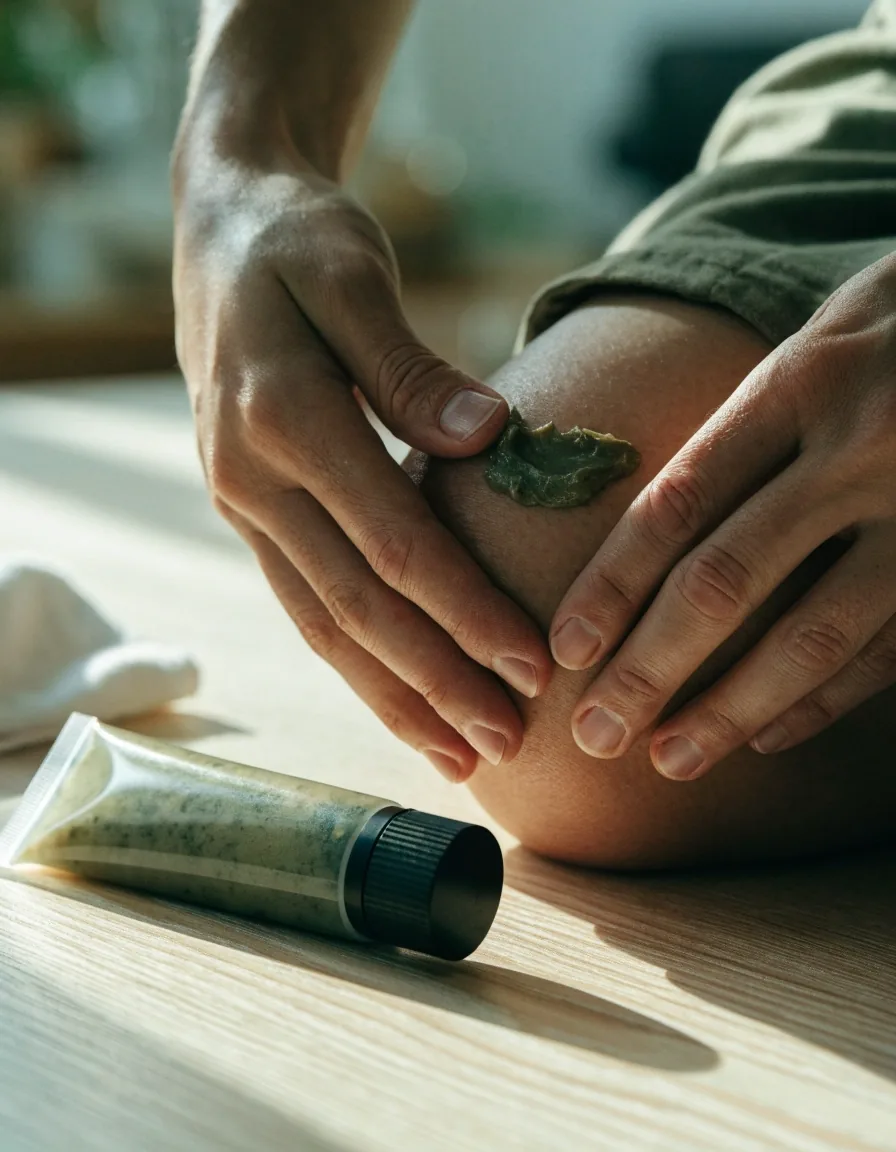
Weleda Arnica Massage Balm and Pernaton Cooling Gel — the two poles of the balm-and-gel category.
Scroll the strip to walk the five comparison groups
Botanical-led capsules
Bio-Nature Joint Aid Herbal Complex sits clearly in this group: turmeric rhizome extract, boswellia serrata extract and black pepper extract in vegetable cellulose capsules, with the ingredients framed as active botanicals working together. It is a formula you can reason about herb by herb, which makes it a good entry point if you are new to natural joint care. The absence of glucosamine or MSM means you are choosing the herbal argument outright rather than hedging across both.
Read a botanical-led label in this order: which herbs are named, whether an extract strength is given for each one, and whether an absorption partner such as black pepper is included. A short, specific list is easier to compare than a long one where no single amount stands out.
Good fit when
- You want to judge one herb at a time rather than a blended claim.
- You already take a separate source of glucosamine or MSM.
- You prefer capsules that are easy to take daily and not capsules for body pain used only on bad days.
The trade-off
A hybrid list is longer, so individual amounts are harder to assess. Read the panel, not the front of the pack.
Hybrid formulas
Gluco Chondro 2700 is the clearest hybrid example, combining glucosamine, chondroitin, MSM, devil's claw, hyaluronic acid and turmeric in a single product, and marketed around healthy joints, cartilage and connective tissue. Zipvit Joint Health takes a similar mixed approach across its collection, highlighting glucosamine, chondroitin and turmeric while positioning products around maintaining joint health rather than dramatic claims. Hybrids suit people who do not want to choose between the two ingredient philosophies.
If daily support joints the routine you are after, a hybrid is one bottle to manage rather than three, and it is often sold as capsules for healthy legs and general everyday mobility. The trade-off is a longer list where individual doses can be harder to assess, so compare the amounts that are actually stated before you compare the front of the pack.

Mainstream retailer ranges
Holland & Barrett's Muscle & Joint Pain Relief category is worth looking at separately, because it shows how a high-street retailer frames this space. The range spans tablets and capsules aimed at once- or twice-daily use, with multiple sizes including 50 and 100 capsules. Its own FAQ copy names devil's claw and sigesbeckia as traditional herbal medicinal remedies.
That is a useful signal about which herbs a mainstream UK audience is expected to recognise, and it is a good place to see traditional and everyday positioning sitting side by side. When you shop a retailer own-label range, the size you pick changes the daily cost more than the formula does, so run the arithmetic before you decide a larger bottle is better value.
Single-herb products
Devil's claw appears as a standalone product as well as an ingredient in bigger formulas, which makes it the simplest way to try one herb on its own. The advantage is clarity: no ambiguity about what you are taking. The disadvantage is that you give up any combined-ingredient story, and you may end up taking more capsules each day to cover what a blend would have covered in one.
If you are methodical about this, single-herb products are the easiest way to learn how a specific botanical suits you before committing to a complex blend. Keep everything else in your routine steady for a few weeks so you are reading one change at a time.
Topical options side by side
Weleda Arnica Massage Balm and Pernaton Cooling Gel represent the two poles of the topical category. The Weleda product is a traditional herbal medicinal product for symptomatic relief of muscular pain, backache, minor sports injuries, stiffness, bruising, cramp and sprains, built on Arnica montana and naturally fragranced with lavender and rosemary. Pernaton is a natural, drug-free support gel using green-lipped mussel extract with menthol, eucalyptus, peppermint and rosemary. One leans warm and massage-based; the other is cooling and applied in seconds.
Choose a topical by when you will actually use it. A balm earns its place if you already rub your legs or back after a bath; a cooling gel suits people who want fast pain relief in the sense of quick application and immediate sensation rather than a longer routine.
What to compare first
Ingredient category beats everything else. Then daily cost, worked out from the dose and capsule count rather than the shelf price. Then format fit: can you realistically take a capsule twice a day, or would a gel you apply after a shower actually get used? Then check the extract strength on any herb and whether an absorption partner like black pepper is included. Only after all that is it worth looking at brand.
Then give it time
Working out fast joint recovery is not a label feature. Compare to narrow the field, then judge the routine over several weeks rather than over a weekend.
Reading the "updated" line on a product page
Several product pages in this category carry an updated date, and it is worth glancing at. Zipvit's Joint Health collection and Bio-Nature's Joint Aid page both show recent updates, which usually means reformulation, packaging change or revised copy. If you are comparing from memory, a product you remember from a year ago may not be the same formula now. Check the current ingredients list rather than trusting an old impression.
A useful habit: when you find a joint pain aid you like, save the current ingredient list rather than the product name. Names travel between retailers and pages more easily than formulas do, and a saved panel tells you what you were actually taking.
What comparison can't tell you
No table tells you how a product will feel for you. Herbal ingredients affect people differently, and much of the positioning in this category rests on traditional use rather than on outcomes anyone can promise you. Use comparison to narrow the field and understand what you are buying, then make your own judgement over several weeks.
If you take medication or are managing a diagnosed condition, treat the table as preparation for a conversation with a pharmacist, not a replacement for one. Bring the ingredient list with you; a pharmacist can read it faster than you can and tell you what to look out for.
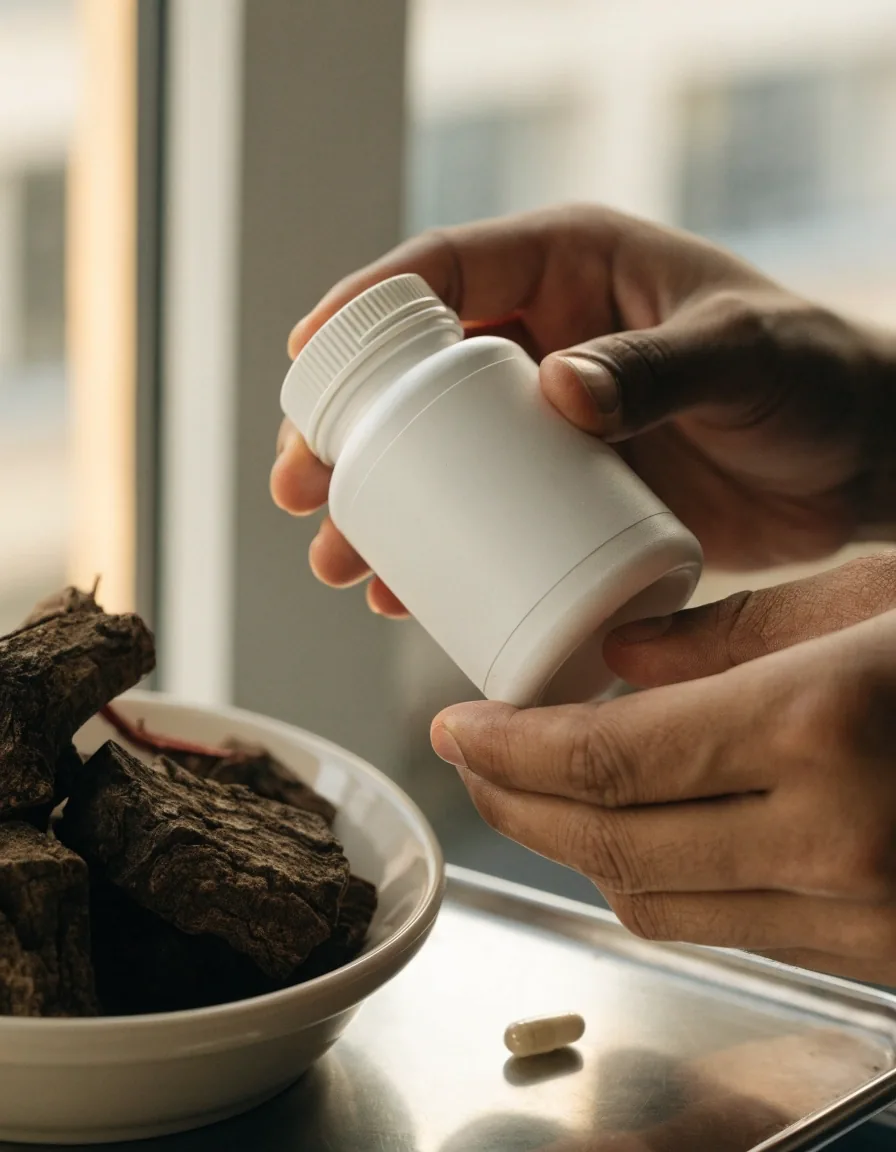
A pharmacist can read an ingredient panel faster than any comparison table.
Questions readers ask before choosing
Are hybrid formulas better than botanical-only ones? Open
Not inherently. They cover more ingredient types, but a long list can mean smaller amounts of each. It depends on what you want.
Does a higher price mean a stronger formula? Open
Not reliably. Compare extract strengths and daily cost rather than shelf price.
Why do some formulas include black pepper? Open
It supplies piperine, which formulators include to support absorption of the accompanying botanicals.
Can I compare capsules and gels directly? Open
Only by format fit. They do different jobs, so it is less a comparison than a choice about which routine suits you.
Where to go next
This page sorts the market by format. The three pages below go one layer deeper: what each botanical is used for, how a capsule routine fits a normal week, and how balms and gels compare with capsules as a way of supporting comfortable movement.
Keep reading
- Everyday Mobility — restoring joint mobility gradually with a simple daily plan
- About Us — who writes this resource and how we choose what to cover
- Contact — ask a question before you buy anything
Questions about a specific product we have not covered? Write to [email protected] or call +44 117 405 4284, Monday to Friday, 9:00 AM – 6:00 PM.